
Place-Based Interventions to Prevent Gun Violence
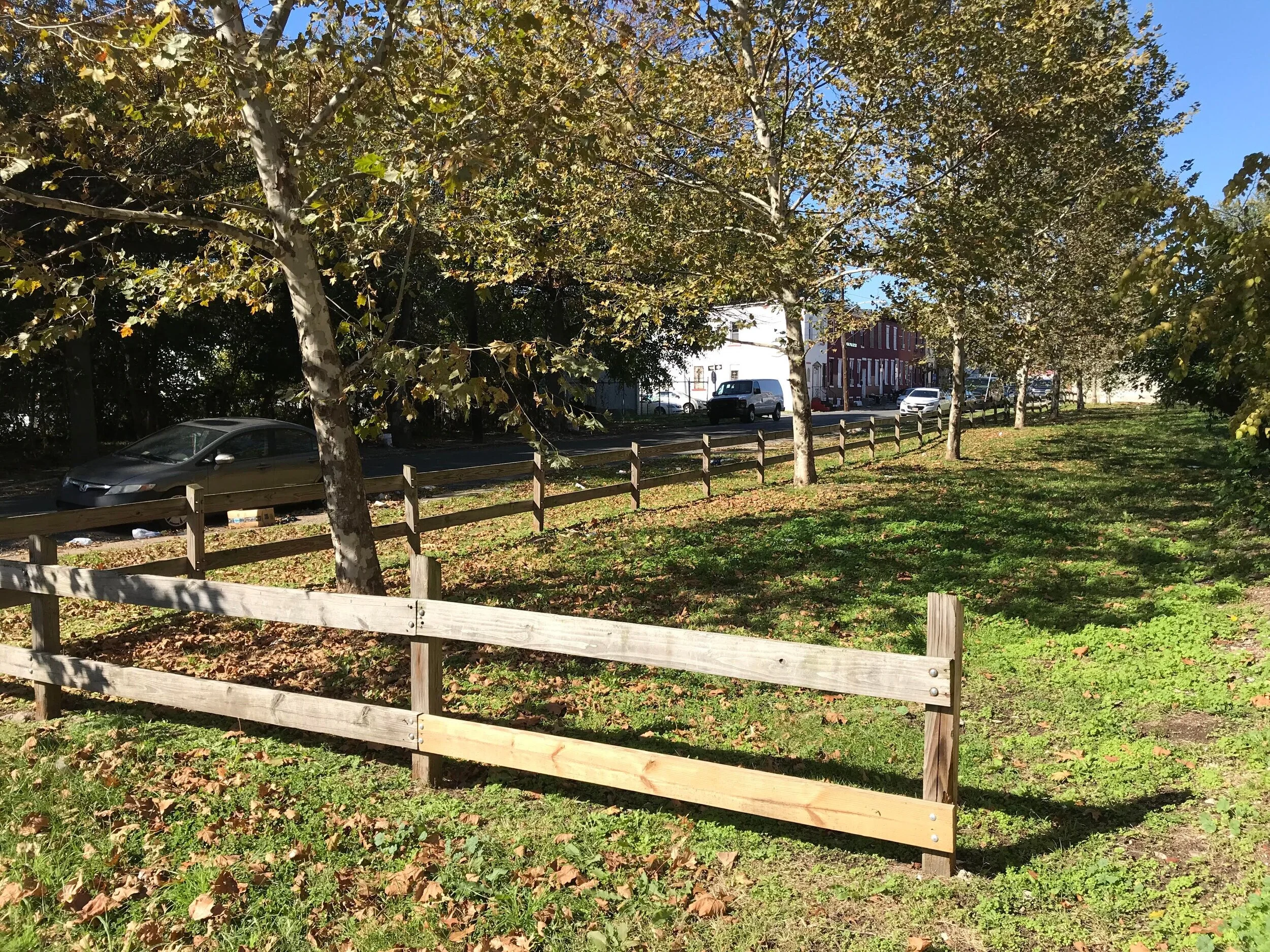
This innovative research has established the relationship between the restoration of blighted and vacant land and its impact on gun violence, fear, and crime in urban neighborhoods. Current projects, publications, and relevant media are included below
Current Projects
Glitter, Trash, and Litter Abatement Intervention (University of Pennsylvania Collaboration)
Research evaluating how environmental cleanup and neighborhood condition improvements impact violence and well-being.
New Orleans Greening and Abandoned Building Remediation (Tulane Collaboration)
Study of place-based interventions targeting vacant land and abandoned structures to reduce violence and improve neighborhood conditions.
Habitat for Humanity Evaluation (Exploratory)
Early-stage work examining how housing and neighborhood investment initiatives may influence violence and health outcomes.
A randomized trial of abandoned housing remediation, substance abuse and violence
Place matters - adaptable solutions to violence at the community level
Media
Transforming City Neighborhoods
TedX Philadelphia - June 2019
The Other Side of “Broken Windows”
The New Yorker - August 2018
Relevant Publications
Shooting-Free Days, Shooting-Death-Free Days, and Multi-Shooting-Free Days Across Major U.S. Cities, 2015–2024
Charles C. Branas, Isbah Plumber, Riley Bennett, Olivia Landes, Sonali Rajan, JAMA Health Forum, 2026. This multi-city, repeated cross-sectional time-series analysis introduces three novel safety-focused metrics—shooting-free days, shooting-death-free days, and multi-shooting-free days—and applies them to the 10 largest U.S. cities using Gun Violence Archive data from 2015–2024. Findings reveal substantial variation across cities and significant declines in all three metrics over time, demonstrating how these measures can complement traditional violence counts and support policy evaluation and public accountability.
From Neighborhood to Household: Connections Between Neighborhood Vacant and Abandoned Property and Family Violence
Jennifer M. Fleckman et al., Journal of Urban Health, 2025. This study examines how neighborhood conditions influence family-level violence, highlighting connections between structural environments and household risk.
Gun-Free Zones and Active Shootings in the United States: A Matched Case-Control Study
Paul M. Reeping, Christopher N. Morrison, Ariana N. Gobaud, Sonali Rajan, Douglas J. Wiebe, Charles C. Branas, Lancet Regional Health – Americas, 2024. A matched case-control analysis finding that gun-free zones were associated with lower odds of active shooting incidents compared with non-gun-free establishments, challenging assumptions about the safety effects of gun-free zone policies.
The Impact of Vacant and Abandoned Property on Health and Well-Being: A Qualitative Inquiry
Gabriella D. Roude et al., Applied Research in Quality of Life, 2024. This qualitative study examines how neighborhood disinvestment influences health, safety perceptions, and well-being, highlighting pathways linking environmental conditions to violence risk.
Building a Culture of Health Through the Built Environment: Impact of a Cluster Randomized Trial Remediating Vacant and Abandoned Property on Health Mindsets
Katherine P. Theall et al., Journal of Urban Health, 2024. This study explores how improvements to the built environment shape community health perceptions and norms, highlighting broader social and psychological impacts of place-based interventions.
Community Engagement, Greening, and Violent Crime: A Test of the Greening Hypothesis and Busy Streets
Catherine H. Gong, Gregory Bushman, Bernadette C. Hohl, Michelle C. Kondo, Patrick M. Carter, Rebecca M. Cunningham, Laney A. Rupp, Alison Grodzinski, Charles C. Branas, Kevin J. Vagi, Marc A. Zimmerman, American Journal of Community Psychology, 2023. A quasi-experimental study showing that community-engaged vacant lot greening in Youngstown, OH, was associated with greater declines in violent crime around treated street segments compared with control conditions.
Effect of Abandoned Housing Interventions and Gun Violence, Perceptions of Safety, and Substance Use in Black Neighborhoods: A Citywide Cluster Randomized Trial
Eugenia C. South et al., JAMA Internal Medicine, 2023. This randomized trial evaluates abandoned housing remediation and finds reductions in gun violence and improvements in perceptions of safety, demonstrating the effectiveness of structural, place-based interventions.
Lessons Learned from a Citywide Abandoned Housing Experiment
John MacDonald et al., Journal of the American Planning Association, 2023. This paper outlines implementation insights from a large-scale housing remediation initiative, highlighting key considerations for scaling place-based violence prevention strategies.
Place-Based Interventions and the Epidemiology of Violence Prevention
Ariana N. Gobaud, Ahuva L. Jacobowitz, Christina A. Mehranbod, Nadav L. Sprague, Charles C. Branas, Christopher N. Morrison, Current Epidemiology Reports, 2022. A review summarizing empirical evidence on neighborhood-level interventions (including vacant lot greening and blight remediation) and their implications for violence prevention and research design.
Reducing Crime by Remediating Vacant Lots: The Moderating Role of Surrounding Land Uses
J. MacDonald et al., Journal of Experimental Criminology, 2022. A quasi-experimental analysis in Philadelphia demonstrating that citywide vacant lot greening reduced total crime and multiple crime subcategories, with effects varying by surrounding land use characteristics.
Community Greening, Fear of Crime, and Mental Health Outcomes
Cassidy J. Burt, Michelle C. Kondo, Bernadette C. Hohl, Catherine H. Gong, Gregory Bushman, Caroline Wixom, Eugenia C. South, Rebecca M. Cunningham, Patrick M. Carter, Charles C. Branas, Marc A. Zimmerman, American Journal of Community Psychology, 2022. This study explores how vacant land maintenance and greening relates to mental health outcomes and fear of crime, showing that improvements in land conditions are associated with reduced fear and psychological distress among residents.
Gender Differences in Impacts of Place-Based Neighborhood Greening Interventions on Fear of Violence Based on a Cluster-Randomized Controlled Trial
Michelle C. Kondo, Jane E. Clougherty, Bernadette C. Hohl, Charles C. Branas, Journal of Urban Health, 2021. This cluster-randomized controlled trial evaluated how vacant lot greening interventions affect perceived fear of violence in urban neighborhoods and examined differences by gender, showing varied responses in safety perceptions following environmental improvements.
Community Engaged and Informed Violence Prevention Interventions
Megan K. Formica, Stephanie M. Cavanaugh, Charles C. Branas, Pediatric Clinics of North America, 2021. This review synthesizes community-engaged and place-based violence prevention strategies, highlighting the role of neighborhood-level interventions in improving safety, strengthening community trust, and reducing violence.
Changes in Crime Surrounding an Urban Home Renovation and Rebuild Program
Michelle C. Kondo et al., Urban Studies, 2021. This study evaluates the impact of large-scale housing renovation efforts on surrounding crime, highlighting how neighborhood investment and improvements to the built environment can contribute to violence reduction.
Effect of Remediating Blighted Vacant Land on Shootings: A Citywide Cluster Randomized Trial
Moyer R, MacDonald JM, Ridgeway G, Branas C, American Journal of Public Health, 2019
Citywide Cluster Randomized Trial to Restore Blighted Vacant Land and Its Effects on Violence, Crime, and Fear
Branas C, South E, Kondo MC, Hohl BC, Bourgois P, Wiebe DJ, MacDonald JM, Proceedings of the National Academy of Sciences of the United States of America, 2018
Effect of Greening Vacant Land on Mental Health of Community-Dwelling Adults
South EC, Hohl BC, Kondo MC, MacDonald JM, Branas C, JAMA Network Open, 2018
The Association Between Urban Tree Cover and Gun Assault: A Case-Control and Case-Crossover Study
Kondo MC, South EC, Branas C, Richmond TS, Wiebe DJ, American Journal of Epidemiology, 2017
Modifiable Neighborhood Features Associated with Adolescent Homicide
Culyba AJ, Jacoby SF, Richmond TS, Fein JA, Hohl BC, Branas C, JAMA Pediatrics, 2016
A Difference-in-Differences Analysis of Health, Safety, and Greening Vacant Urban Space
Branas C, Cheney RA, MacDonald JM, Tam VW, Jackson TD, Ten Have TR, American Journal of Epidemiology, 2011